


Carrara vs. Calacatta vs. Statuario: Which Marble Is Best for Countertops?
Carrara, Calacatta, Statuario, and Danby can all work well for marble countertops. The right choice depends on the full slab, the room, and how you feel about natural wear. Carrara often looks softer. Calacatta and Statuario usually bring stronger contrast. Danby offers pale backgrounds and a wide range of movement. The names can narrow your search, but each slab still needs to earn its place in the room.
What Is the Best Type of Marble for Countertops?
There is no single best marble for every countertop. The right variety matches the visual role you want, the application, the finish, and your comfort with etching, staining, scratches, and patina.
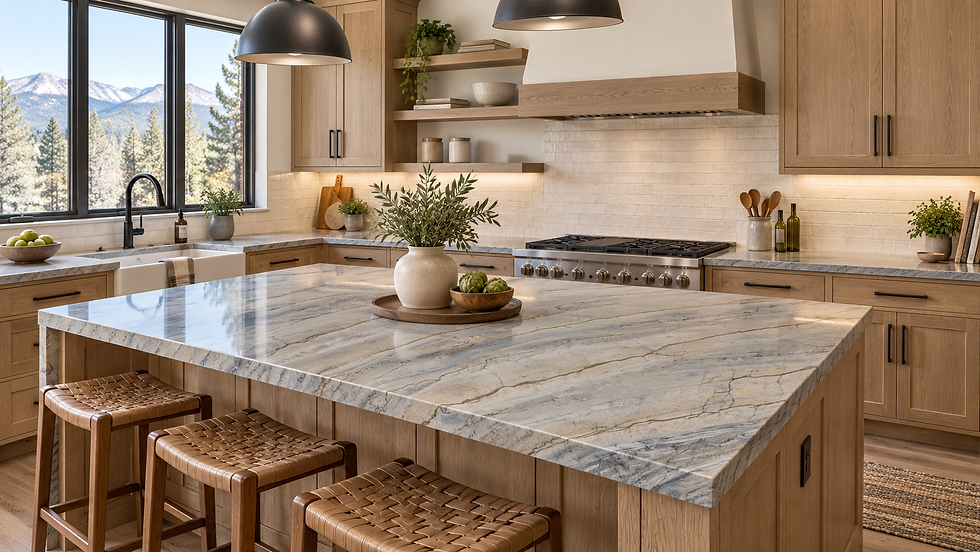
Carrara often suits kitchens that need quiet movement rather than a dominant focal point. Calacatta or Statuario may fit an island where wider, higher-contrast veining deserves space. Danby is worth considering when you want a light North American marble with its own range of backgrounds and vein patterns.
Use those names to organize your search, then judge the slab itself. Natural stone varies by quarry area, block, grade, and treatment. Two pieces sold under the same name can look different. Slab condition and layout also affect how the stone works around the sink, seams, edges, and focal areas.
Carrara, Calacatta, Statuario, and Danby Marble Compared

These descriptions are useful starting points. They are not promises about every slab.
Carrara marble: Carrara commonly has a gray-white or blue-gray background with fine, soft gray veins. Its movement can feel quieter and more evenly distributed than Calacatta. That makes it useful for kitchens, vanities, and surrounds where the marble should support the room rather than control it. A more patterned background may also make minor wear less obvious than it would be on a bright, open field.
Calacatta marble: Calacatta often has a whiter or warmer background with broader gray, taupe, or gold-toned veins. The stronger spacing and contrast can turn an island, vanity, or full-height application into the room's visual lead. Because the movement may change sharply across one slab, layout approval matters before cutting.
Statuario marble: Statuario is typically associated with a bright background and bold gray veining. It can create a high-contrast focal surface without relying on dense patterning. That open field also makes placement important. A sink cutout, seam, or edge can interrupt a major vein if the layout is not planned carefully.
Danby marble: Quarried in Vermont, Danby marble comes in several selections with pale backgrounds and movement that can range from subtle to pronounced. It gives homeowners and designers another route to a light marble surface beyond the familiar Italian names. As with every natural stone, the exact slab still decides color, vein direction, soundness, and project fit.
Carrara, Calacatta, and Statuario describe marbles associated with Italy, but origin is not a quality grade. Our guide to what Italian marble actually means explains why country and trade labels cannot replace slab-level review.
Other Marble Options Worth Seeing in Person
Carrara, Calacatta, Statuario, and Danby receive most of the attention because their pale backgrounds fit many current kitchens and baths. They are not the full marble category.
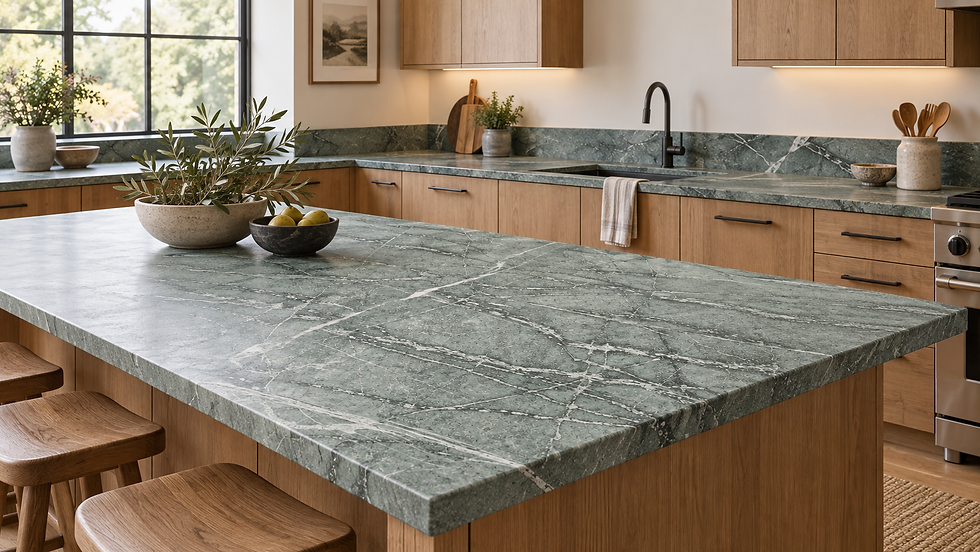
Arabescato selections can show more active, interlacing movement. Dark marbles may carry white, gold, or lighter mineral lines across a charcoal or black field. Green, brown, cream, pink, and red marbles create a very different design direction. Availability changes, and naming practices vary across suppliers.
Use photos to start the search. A small sample can show color. It cannot reveal a long vein, a quiet area, a repaired feature, or the way two pieces may meet. If a less familiar marble interests you, ask what the trade name means, where the slab came from, how it was treated, and whether it suits the project.
Appearance Is Only Half the Marble Decision

Every variety in this guide is still marble. Most marble contains calcite, which reacts with acids such as lemon juice, vinegar, wine, and some cleaners. The reaction leaves a dull area called an etch. Sealer can slow absorption and help reduce staining risk, but it does not stop acid etching.
Finish changes how that wear appears. Polished marble reflects more light and strengthens color and vein contrast, but etches stand out against the gloss. Honed marble has a softer, lower-sheen surface that can make minor etching less noticeable. It may also need attentive sealing and prompt cleanup. Our comparison of which marble finish fits your kitchen goes deeper into that choice.
Slab condition matters before maintenance begins. Fabricators review fissures, resin-filled areas, mesh backing, thickness, and repairs. They also check where major veins cross a sink, cooktop, narrow rail, seam, or exposed edge. A famous stone name cannot rescue a poor layout.
The ownership question is simple: can you accept a surface that records use? If every dull spot or fine scratch will feel like failure, marble may create more stress than pleasure in a working kitchen. If you can care for it and accept patina, the material can remain a strong fit. Understanding why stains and etching are different makes that decision much easier.
Let the Full Slab Set the Final Direction
The marble name gives you a vocabulary. The slab gives you the answer.
At our Palmer Lake slab yard, you can compare the background, movement, finish, and condition of full slabs beside your cabinet, floor, paint, and hardware samples. We can then review focal areas, seams, cutouts, and edge details before our in-house fabrication team begins work.
Visit the slab yard or request a free estimate to choose marble with a clear view of both the design and the ownership reality.
Frequently Asked Questions About Marble Countertop Types
What Type of Marble Is Best for Kitchen Countertops?
The best marble is a sound slab that fits your design, layout, and tolerance for wear. Carrara can suit a kitchen that needs softer movement. Calacatta and Statuario often work well as stronger focal surfaces. Danby adds several light marble options with their own visual character. All can etch, stain, or scratch, so no variety removes the need for realistic care expectations.
What Is the Difference Between Carrara and Calacatta Marble?
Carrara typically has a grayer background with finer, more evenly distributed veining. Calacatta often has a whiter or warmer field with broader, higher-contrast gray or gold-toned veins. Those are tendencies, not fixed specifications. Color, movement, grade, and treatment can vary between slabs, so compare the actual pieces rather than buying from the name alone.
Is Statuario Marble More Durable Than Carrara?
Do not assume Statuario is more durable because it is often positioned as a premium marble. Both are calcite-based natural stones that can scratch and etch. Performance depends on the specific slab, its mineral structure and condition, the finish, the layout, fabrication, support, and daily use. Choose Statuario for a confirmed slab and design fit, not for a blanket durability promise.
Is Danby Marble a Good Choice for Kitchen Countertops?
Danby can be a strong kitchen option for someone who wants light natural marble and accepts marble's care requirements. Different Danby selections vary in background, veining, porosity, and movement. Review the exact slab, planned finish, sealing guidance, and layout with your fabricator. It can still etch from acids, just like other calcite-based marbles.
Which Marble Finish Hides Etching Better?
A honed finish usually makes etching less noticeable because the surface already has a low sheen. A polished finish creates more reflection, so a dull etch mark can stand out. Honing does not prevent the chemical reaction, and it does not make marble stain-proof. Choose the finish based on both the look and how visible wear will feel in your kitchen.
Do All Marble Countertops Need to Be Sealed?
Many marble countertops benefit from a penetrating sealer, but the correct schedule depends on the slab, finish, sealer, and use. Follow the guidance for your installed stone instead of sealing on an arbitrary calendar. Remember that sealer slows absorption. It does not prevent acids from etching the surface, and applying too much can leave residue or haze.

Comments