


How to Prevent Stains and Etching on Marble Countertops
Preventing stains and etching on marble countertops comes down to three things: choosing the right finish at fabrication, sealing on a regular cadence, and understanding that staining and etching are two different problems that need two different prevention strategies. Most marble owners are only told about one of these.
After 25+ years of fabricating marble for Colorado homes, we've seen what happens when the finish conversation doesn't happen at the slab yard, and what happens when it does. This guide walks through the distinction that matters most, the finish decision that shapes everything downstream, and the daily habits that keep marble looking the way you fell in love with it.
Stains and Etching Are Not the Same Problem
A stain happens when a liquid is absorbed into marble's pores and leaves discoloration behind, like a coffee ring or an oil mark. Etching is different. It's a surface reaction that occurs when acidic substances contact the calcium carbonate in marble, dulling the finish on contact, regardless of whether the surface is sealed. Sealing slows absorption. Etching ignores sealer entirely. Those are two different jobs.
That distinction matters because it changes what prevention actually looks like. Treating an etch mark like a stain leads to more sealer, more frustration, and the same dull spot still sitting there. Treating a stain like an etch mark means missing the window when prompt cleanup would have prevented it entirely.
Here's the practical version. Stains come from absorbed liquids: wine, coffee, oil, fruit juice. Sealing buys time, prompt cleanup does the rest. Etching comes from acids: coffee, citrus, vinegar, wine, salad dressing. Calcium carbonate is the mineral that gives marble its character, and it reacts to acids the way it always has, with or without a sealer between them.
That's why both prevention strategies need to live alongside each other. They protect against different things. For homeowners weighing marble and other natural stone options, understanding that distinction up front is what makes ownership feel manageable instead of mysterious.
The Finish Decision Changes Everything
Your finish choice quietly shapes the entire ownership experience. It determines how visible any damage becomes over time, which is why this is the upstream decision most buyers don't realize they're making until after installation.
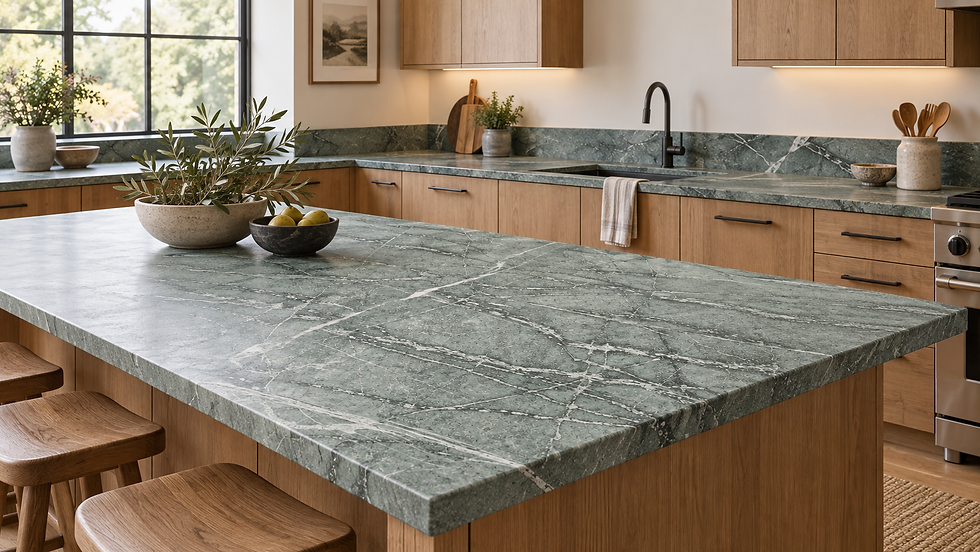
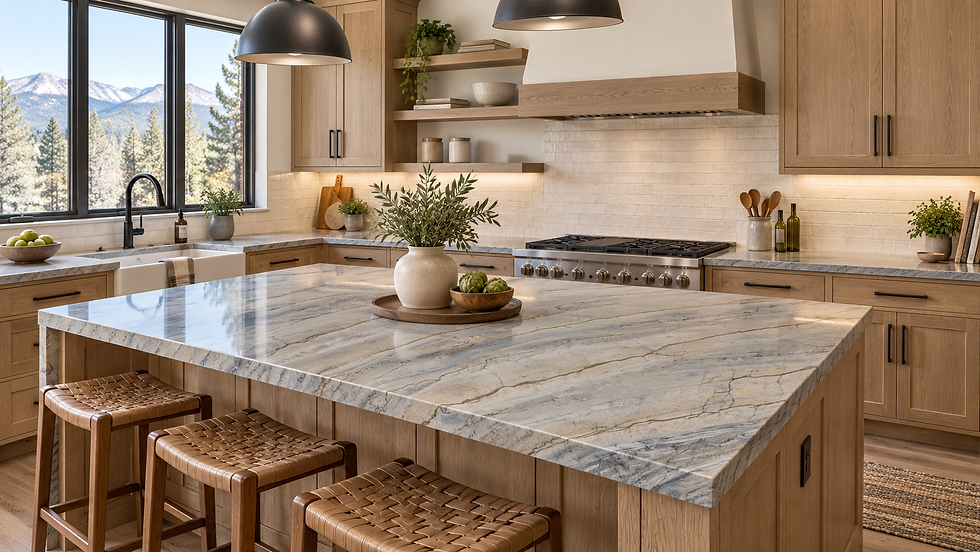
Honed marble has a matte surface that absorbs light rather than reflecting it. That single property changes everything downstream. Etch marks blend into the finish instead of announcing themselves, because there's no glossy sheen to contrast against. Honed is slightly more porous than polished, so spill cleanup matters a little more, but the tradeoff is worth it for most active kitchens. If you want beauty without vigilance, honed is the practical answer.
Polished marble is reflective, glossy, and visually dramatic. The polished surface is also slightly more stain-resistant, which sounds like the obvious win until you account for etching. Every etch mark shows on a polished finish, because the dull spot contrasts sharply against the shine around it. Polished marble works best in lower-traffic settings: bathroom vanities, fireplace surrounds, powder rooms, and kitchen islands used primarily for display.
So which is better for kitchens? For most active kitchens, honed. That's the short answer.
The longer answer is that some buyers actively choose polished and embrace the patina that develops over the years. Over time, those etch marks start to feel like part of the story, the quiet record of a kitchen that actually gets used. Plenty of homeowners come to love that look. The important thing is that the decision gets made consciously, not by default.
If you'd like to see how honed and polished marble compare in person, our team at the Palmer Lake slab yard can walk you through both. For a fuller view of what marble ownership looks like across both finishes, see our full guide to marble in the kitchen.
How to Prevent Stains and Manage Etching

Marble care isn't complicated. It's consistent. Two minutes of daily attention is all most marble surfaces need, organized around the two problems we've already separated: stains and etching.
Preventing Stains
Stains come from absorbed liquids, so prevention is about slowing absorption and clearing spills before they have time to settle in.
Seal every six to twelve months: High-use kitchens lean toward six. Use the water-bead test between sealings, if water beads on the surface, the seal is holding; if it absorbs, it's time to reseal.
Clean spills promptly: Use a soft cloth and blot rather than wipe. Wiping spreads pigment across the surface; blotting lifts it.
Use pH-neutral cleaners only: Vinegar and citrus-based products etch on contact, and they show up in a lot of "natural" cleaning sprays. Check the label even when the bottle looks safe.
Move faster in dry climates: Colorado's low humidity causes spills to evaporate faster than they would in humid regions, which can concentrate pigments and oils at the surface before the liquid is fully absorbed. Prompt cleanup matters more here, particularly with wine, coffee, and oil.
Managing Etching
Etching is a surface reaction, so the goal shifts from prevention to repair when it does happen.
On honed marble: Light etch marks are nearly invisible, and heavier marks can often be addressed with a marble polishing powder.
On polished marble: Light etching can sometimes be buffed out. Deeper or widespread etching usually calls for professional refinishing.
For deeper repairs or guidance: Take a look at our marble pros and cons page for more on what to expect from marble over time.
One last reframe worth naming. Many marble owners come to embrace etch marks as part of the surface's character, particularly on honed finishes. That softening of the finish over time is part of how marble ages, and plenty of homeowners come to prefer it.
Frequently Asked Questions About Marble Stains and Etching
What causes etching on marble countertops?
Acidic substances like coffee, citrus juice, wine, vinegar, and salad dressing react with the calcium carbonate in marble and dull the surface finish on contact. This is a surface reaction that happens whether or not the marble is sealed. The dull spot you see is the marble itself reacting at the surface.
Does sealing marble prevent etching?
No. Sealing slows liquid absorption and helps prevent staining. It has no effect on etching, which is a chemical reaction at the surface. Both stains and etching matter, but they require different prevention strategies, which is why so many marble owners feel like they're sealing diligently and still seeing dull spots they can't explain.
Is honed or polished marble better for kitchens?
For most active kitchens, honed. The matte finish absorbs light rather than reflecting it, so etch marks blend into the surface instead of standing out. Polished marble is beautiful but shows every mark, which makes it better suited to lower-traffic applications like bathroom vanities, fireplace surrounds, or kitchen islands used primarily for display.
How often should marble countertops be sealed?
Every six to twelve months for most residential kitchens, with high-use surfaces leaning toward six. In Colorado's dry, high-altitude climate, prompt spill cleanup between sealings matters more than it does in humid regions. Low humidity can concentrate spill residue at the surface before full absorption occurs, which makes daily habits as important as the sealing schedule. To explore finishes and slabs in person, explore marble at ISW.
Photos Won't Tell You What Your Marble Will Look Like
Honed and polished read completely differently in real light, against the cabinetry and floors you're actually putting them next to. Photos flatten that, which is why finish decisions made from a screen are rarely the ones you'd make standing in front of the slab.
Come walk through both at our Palmer Lake slab yard with our team and leave knowing which one belongs in your home. Browse our marble slab inventory before your visit if you'd like a head start.

Comments