


How to Pair Quartzite Countertops With a Backsplash
Pair quartzite countertops with a backsplash by choosing which surface should lead the room. If the slab has bold movement, the backsplash usually works best as a quieter background. If the quartzite is restrained, tile can carry more texture, color, or pattern. Start with the full slab, not a product photo. Then compare undertone, movement, tile scale, grout, cabinets, and lighting together. That order keeps two good selections from competing once they share the same kitchen.
How to Choose a Backsplash for Quartzite Countertops
Use this five-step sequence:
View the full quartzite slab. A sample cannot show a long vein, a shift in background color, or the section that may become your island.
Identify the undertone. Decide whether the stone leans warm, cool, green, blue, gray, cream, or taupe.
Judge the movement. Bold veins usually need a calmer wall. Quieter slabs leave more room for texture or pattern.
Choose the backsplash format. Compare tile, a short stone splash, a full-height slab, or a focused slab section behind the range.
Test the complete group. Put the slab, tile, grout, cabinet, floor, paint, and hardware samples under the lighting planned for the room.
Do not force an exact color match. Materials can relate through undertone, contrast, texture, or repeated color. The goal is a clear visual hierarchy, not a room where every surface tries to disappear into the next.
Decide Which Surface Should Lead the Kitchen

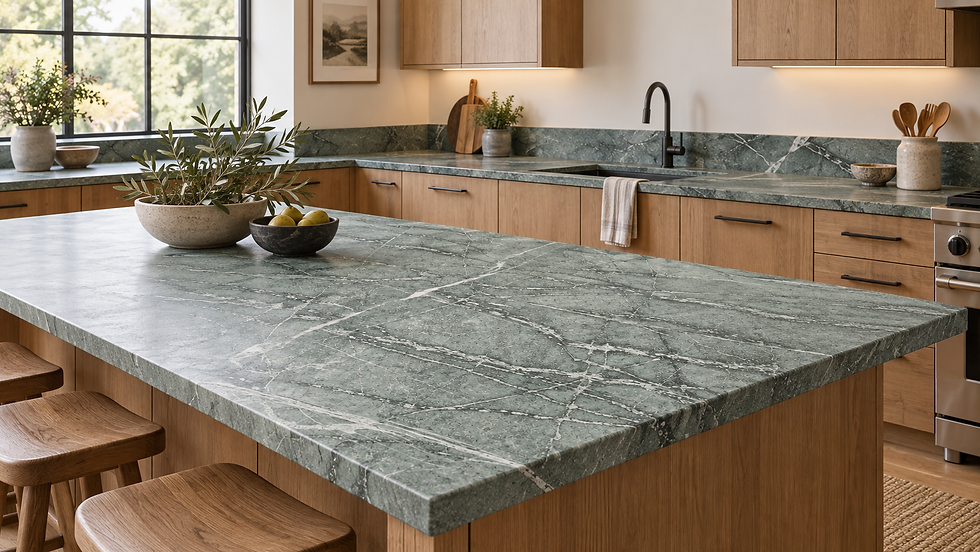
Quartzite often carries more movement than a manufactured surface. A single slab can shift from quiet areas to broad veins, crystal fields, or strong changes in color. Give that movement a role before selecting the wall behind it.
If the countertop is the focal point, use a backsplash with lower contrast. Warm white tile, soft cream, pale taupe, or a quiet gray can support the stone without copying it. Handmade tile can add texture while keeping the color controlled. A close grout color reduces the grid and lets the slab stay in front.
If the quartzite is calmer, the backsplash can take a stronger position. You might use deeper color, a larger format, more visible texture, or a restrained pattern. Keep the cabinet faces and flooring in the conversation. Expressive wood, active stone, patterned tile, and high-contrast grout can become too much when all four appear together.
Contrast can work. It just needs a reason. A dark backsplash may sharpen a light quartzite, while a pale wall can open space around a darker slab. The better question is not “Does it match?” Ask, “Which surface do I notice first, and is that what the room needs?”
Tile or Full-Height Stone? Choose the Right Backsplash Format

Tile gives you the widest range of color, shape, scale, texture, and cost. It also introduces grout lines. Small tile and contrasting grout create more visual activity. Large tile with a close grout color reads as a quieter field.
Subway and simple rectangular tile can support strongly veined quartzite without feeling empty. Handmade or zellige-style tile adds surface variation and reflected light. Test it beside the slab instead of treating it as a plain neutral. Mosaics and patterned tile can work with quieter stone when the scale stays controlled.
A short stone backsplash creates a clean transition at the wall while leaving painted space above. It uses less material than a full-height application and keeps the countertop as the main feature. The exact height should respond to outlets, windows, cabinets, and the proportions of the room.
A full-height quartzite backsplash creates stronger material continuity. It can carry movement from the counter up the wall and reduce grout lines. The result depends on planning, not just material choice. Slab dimensions, available yield, seam locations, outlets, window returns, corners, wall conditions, and vein direction all affect what can be done.
A focused slab section behind the range can give the cooking wall more presence without using quartzite across every backsplash run. Review that area early. The stone itself handles heat well. Repeated exposure can still affect sealer, nearby finishes, and seams. Our guide to heat and sealant risks around quartzite explains the distinction.
Whatever format you choose, remember that quartzite is natural stone. Porosity varies, and some slabs need more sealing attention than others. Our guide to how quartzite performs in daily use covers cleaning and sealing in more detail.
What Backsplash Goes With Taj Mahal Quartzite?
Start with the actual Taj Mahal slab. The name is commonly associated with warm cream, beige, taupe, and soft gold movement, but background tone and vein contrast vary from piece to piece.
Four backsplash directions often work well:
A warm white tile that relates to the lightest part of the slab
A cream or pale taupe tile that supports its warmer field
A handmade tile with quiet color and controlled texture
A planned continuation of the quartzite up the wall
Cool white tile can make a warm slab look more yellow than expected. A strong gray may pull the palette in a direction the stone does not support. That does not make either color wrong. It means you need to test them together under the room's light.
Grout matters too. A close grout color creates a calmer background. Darker or contrasting grout makes the tile pattern more visible. If the quartzite already has broad movement, a strong grid may compete with it.
Bring the Backsplash Decision Into the Slab Plan
The best time to resolve the backsplash is before slab yield and layout become difficult to change. That is especially true for a full-height application or a feature behind the range.
Bring your cabinet, floor, paint, tile, grout, and hardware samples to our Palmer Lake slab yard. We can compare them with full quartzite slabs and review movement, undertone, seams, outlets, cutouts, and wall transitions before fabrication begins.
Visit the slab yard or request a free estimate to plan the countertop and backsplash as one finished composition.
Frequently Asked Questions About Quartzite and Backsplash Pairings
What Backsplash Goes With Taj Mahal Quartzite?
Warm white, cream, pale taupe, and restrained handmade tile often work with Taj Mahal quartzite. A full-height section of the same stone can also create a strong focal point. Do not choose by the trade name alone. Compare the tile and grout with the actual slab because its warmth, background, and movement can vary.
Should the Backsplash Match Quartzite Countertops?
It should relate to the quartzite, but it does not need to match it exactly. Use a shared undertone, repeated color, controlled contrast, or compatible texture. If the slab has strong movement, let the backsplash recede. If the slab is quiet, the wall can carry more texture or color without creating visual competition.
Can You Pair a Patterned Backsplash With Veined Quartzite?
Yes, but one pattern should lead. Broad, high-contrast quartzite usually pairs more easily with a restrained tile pattern and subtle grout. A quieter slab can support more visible geometry or color. Test a larger tile sample beside the full slab. A small piece may hide how often the pattern repeats across an entire wall.
Is Tile or a Quartzite Slab Better for a Backsplash?
Neither is universally better. Tile offers more design and budget flexibility, but grout adds lines and maintenance. A quartzite slab creates material continuity and fewer joints, but it needs more stone and closer coordination around seams, outlets, corners, and installation. Choose based on the visual goal, available slab yield, wall conditions, and project scope.
Should You Choose Countertops or Backsplash First?
Choose the quartzite slab first in most cases. Natural slabs vary, and the exact piece sets the palette and movement for the room. Backsplash tile usually offers more repeatable options, so it is easier to select after the stone. If you are using a rare or handmade tile, review both materials before either order becomes difficult to change.
Does a Quartzite Backsplash Need to Be Sealed?
It may. Quartzite porosity varies by slab, and backsplash exposure differs from countertop use. Follow the guidance for the specific stone, finish, and sealer. A penetrating sealer can slow absorption, but it does not make the surface waterproof or eliminate routine cleaning. Keep acidic or harsh products away unless your fabricator confirms they are safe.


Comments