


Granite Countertop Edge Profiles: Which One Fits Your Kitchen?
The best granite countertop edge fits the slab, the cabinets, and the way your kitchen gets used. Eased and beveled edges work in many spaces because they look clean, handle daily contact well, and keep granite from feeling too heavy. More detailed profiles can be the right choice when the room has enough scale to support them. This guide explains the options, their practical tradeoffs, and what to review before fabrication begins.
What Is the Best Edge for Granite Countertops?
For most kitchens, an eased edge or a subtle bevel is a strong place to start. Both profiles give granite a finished look without competing with the slab's color and movement. Their simple geometry also makes them easy to clean and less exposed to impact than edges with projecting details.
Other kitchens need something different. A rounded edge may feel better in a busy family kitchen. An ogee can suit traditional cabinetry, while a mitered detail gives a modern island more visual weight.
The best choice comes down to four questions:
Does the edge support the style of the cabinets?
Does it suit the granite's movement and color?
Will it work around corners, overhangs, and appliances?
Are you comfortable with its cleaning needs and fabrication cost?
An edge profile is the fabricated shape along the exposed side of the countertop. It changes the counter's apparent thickness, feel, and overall style.
Popular Granite Edge Profiles and the Kitchens They Fit

You do not need to memorize every profile name. Start by deciding whether the kitchen needs a clean line, a softer curve, more traditional detail, or greater visual thickness.
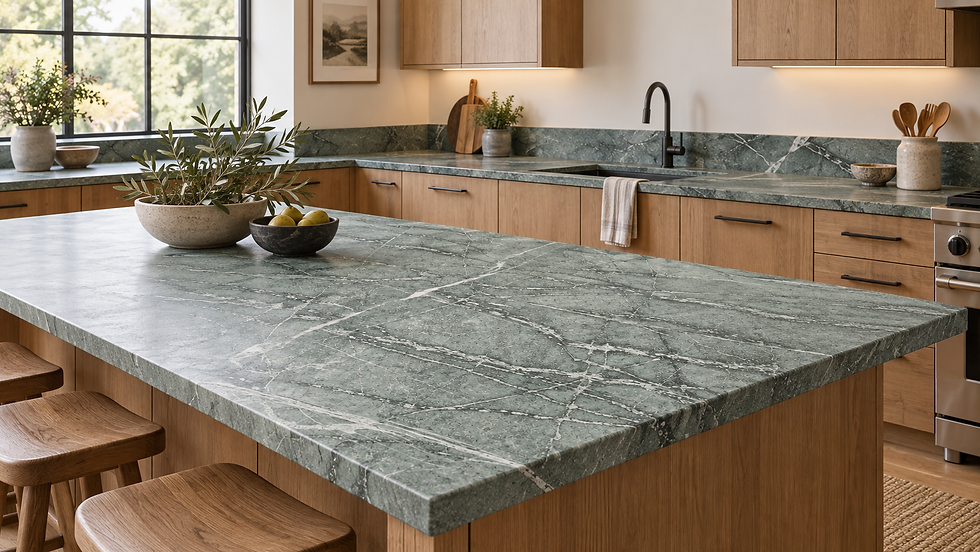
Straight or eased edge: A square-looking profile with the sharp corner softened. It suits modern and transitional kitchens, lets expressive granite lead, and is easy to wipe.
Quarter-round edge: A small curve softens the top corner without making the slab look fully rounded. It feels approachable and works across many cabinet styles.
Quarter-bevel or half-bevel: An angled cut adds a clear perimeter line. A narrow bevel stays restrained, while a wider bevel becomes part of the design. Both can bridge modern cabinetry and traditional details.
Demi bullnose or half bullnose: The top rolls into a curve while the lower portion stays flatter. It softens contact points and shows more of the slab face than a full bullnose.
Full bullnose: The edge curves from top to bottom and feels smooth under the hand. It works well in high-contact areas, though it can make the slab appear thinner and direct spills toward the cabinet face.
Ogee or deep ogee: An S-shaped profile adds traditional detail and depth. It works best when the cabinetry, island size, and architecture support the ornament. The curves take more effort to fabricate and clean.
Quarter-round top and bottom: Softening both corners gives the slab a balanced, finished face. It adds more detail than an eased edge without the full curve of a bullnose.
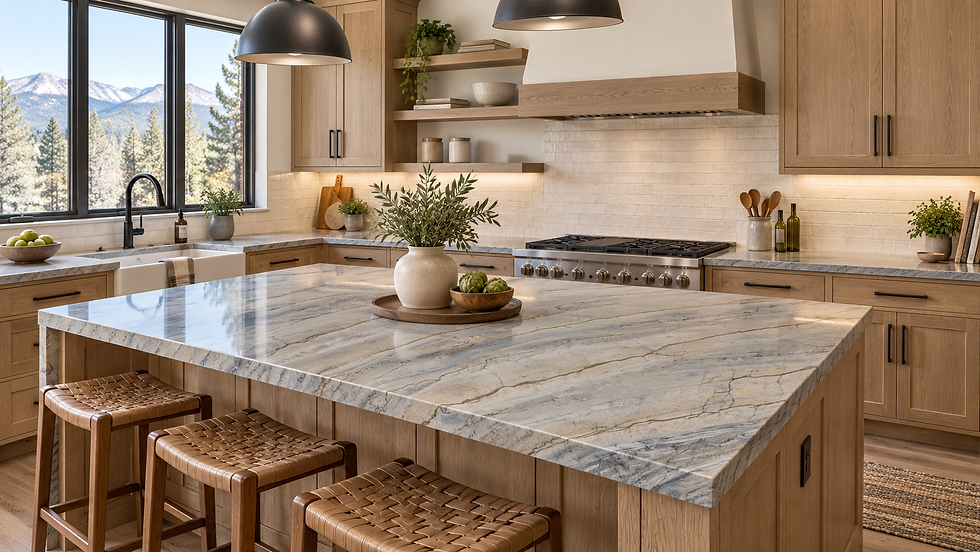
Mitered or built-up edge: A joined apron creates the appearance of a thicker slab. It can give a large modern island more weight, but it requires precise cutting, vein alignment, and seam work.
Chiseled edge: A textured edge exposes a rougher stone character. It can fit rustic or mountain-influenced spaces, but the surface is harder to wipe and can catch fabric if it is not finished correctly.
One term needs clarification. A waterfall end usually means the countertop material continues vertically down the side of an island or cabinet run. Some suppliers also use “waterfall” for a routed edge shape. Confirm which detail is being discussed before approving a quote or drawing.
How Edge Shape Changes Cleaning, Durability, Safety, and Cost
Simple edges usually ask less from you. A flat face and lightly eased corner wipe clean quickly. Profiles with grooves, shelves, or deeper curves give crumbs and residue more places to settle.
Shape also changes where the granite takes contact. Rounded profiles remove a pointed upper corner. Simple profiles have fewer projecting details that can catch a hard impact. No edge is chip-proof, however. Performance still depends on the stone, the profile, the location, the installation, and how the kitchen is used. Our guide to what makes granite so durable explains why hardness is only part of the picture.
Think about where people move through the room. An exposed island corner faces more contact than a perimeter counter against a wall. A softer profile may make sense at that corner even when the rest of the kitchen uses a cleaner line.
Fabrication cost generally rises with complexity. An ogee, built-up edge, or matched miter takes more tooling, polishing, material, and labor than an eased edge. Review the difference in your project estimate rather than relying on a generic price per linear foot.
Match the Edge to the Slab, Cabinets, and Kitchen Layout

Choose the slab before you settle the edge. Granite can have tight mineral patterning, long directional movement, bold color shifts, or a quieter field. Those features change how much detail the finished kitchen can carry.
A strongly moving slab often looks better with a restrained edge. The simple line keeps attention on the stone. A quieter granite may leave more room for an ogee, bevel, or layered detail, especially when the cabinets already lean traditional.
Cabinet proportions matter too. A deep decorative profile can overwhelm slim doors or a compact kitchen. A thin-looking edge may feel under-scaled on a long island with heavy cabinetry. This is why granite color variation and design direction should be reviewed as part of one composition.
Before the first cut, confirm:
The edge on the island and perimeter counters
Countertop thickness and any built-up areas
Exposed corners and high-traffic paths
Sink, cooktop, and appliance clearances
Overhangs and required support
Seam positions and vein direction
The island does not have to match the perimeter. A more detailed island edge can create a focal point while a simpler perimeter keeps the room controlled. The two profiles should still share enough shape or proportion to feel deliberate.
Approve the Edge Before the First Cut
An online profile drawing cannot show how an edge will look on your granite. The stone's pattern, finish, thickness, and position in the room all change the result.
At our Palmer Lake slab yard, you can compare full slabs and edge samples with your cabinet and finish selections. Our team can also review corners, overhangs, sink details, and the layout before our in-house fabrication team cuts the stone. That early review turns a small design choice into a detail that works with the whole kitchen.
Visit the slab yard or request a free estimate to review your granite and edge options with our team.
Frequently Asked Questions About Granite Countertop Edges
What Is the Most Popular Granite Countertop Edge?
Eased edges are among the most common because they work with modern, transitional, and many traditional kitchens. The face stays square-looking while the upper corner is softened for comfort. A bevel, bullnose, or ogee may still fit your cabinetry and slab better. Compare the profiles beside the granite before choosing.
Which Granite Edge Is Easiest to Clean?
An eased or simple beveled edge is usually easiest to clean. Both have few grooves where crumbs or residue can collect. Bullnose profiles are also smooth, although a full curve can carry a spill toward the cabinet below. Decorative profiles need more attention during routine cleaning.
Which Countertop Edge Is Least Likely to Chip?
Simple and softened profiles generally have fewer projecting details exposed to impact. An eased edge, small bevel, or rounded profile can work well in active areas. Still, no profile eliminates chip risk. The specific granite, corner placement, cutouts, support, fabrication, and daily use all affect performance. Read more about where granite can have a practical edge in a working kitchen.
Is an Eased Edge the Same as a Straight Edge?
The terms are often used together. A finished straight or square-looking stone edge normally has its upper corner eased slightly. That softening makes it more comfortable and less vulnerable while preserving the rectangular look. Ask to see the shop sample because terminology varies between fabricators.
Can an Island Have a Different Edge From the Perimeter Counters?
Yes. Using a more detailed edge on the island can give it greater visual weight while a simpler perimeter stays quiet. The combination works best when both profiles relate through line, curve, or proportion. Review them with the slab and cabinet elevations so the island looks intentional rather than disconnected.
Do Decorative Granite Edges Cost More?
They often do because deeper curves, layered profiles, and mitered details require more fabrication and polishing. Thickness, corners, seams, and project scope also affect the estimate. Ask your fabricator to price the approved profile for your layout instead of relying on a generic surcharge.

Comments