


Does Granite Need to Be Sealed? How to Tell and What to Do Next
Updated: Aug 7
Most granite countertops do need sealing, but not on the rigid yearly schedule you have probably read about. Granite is a natural stone with tiny pores, and a good sealer keeps everyday spills like wine, coffee, and cooking oil from soaking in and leaving a mark. How often you reseal depends on your specific slab, how the surface gets used, and Colorado's dry air, which can pull spills into stone faster than you expect. This guide shows you a simple water test to check your own counters, how to tell when it is time to reseal, and the mistakes that quietly damage granite.
Why Granite Needs Sealing in the First Place
Granite feels solid because it is. It is one of the hardest natural stones you can put in a kitchen, and it handles knives, heat, and daily use better than almost any other surface. But hardness and porosity are two different things. Granite still has microscopic pores, and those pores can absorb liquid if the surface is left unprotected.
A penetrating sealer soaks into the top layer of the stone and fills those pores. It does not sit on top like a coat of wax or create a shiny film. Instead, it slows down absorption, which buys you time to wipe up a spill before it turns into a stain.
That distinction matters most with the liquids you use every day:
Cooking oils: oil is the classic granite stain, because it penetrates slowly and leaves a dark shadow that is hard to pull back out.
Wine and coffee: deeply pigmented and slightly acidic, these are the spills most likely to leave a ring near a coffee station or bar.
Water near the sink: constant moisture around the faucet can darken an unsealed slab over time.
Here is the honest part. Sealer protects against absorption. It does not make granite indestructible, and it will not prevent every kind of damage. Think of it as insurance against staining, not a force field. Granite is a natural material, and like the other natural stone countertops we fabricate, it performs best when the care matches the material.
How to Tell If Your Granite Needs to Be Sealed
You do not need special tools to check your granite. You need a few drops of water and about fifteen minutes of patience. This is the same test our team uses, and it works on any granite surface, sealed or not.
What the water test tells you
Pour a small puddle of water, about the size of a quarter, onto a clean section of the counter. Then watch what happens.
Water beads up: the sealer is doing its job. The stone is repelling moisture, and you do not need to reseal yet.
Water sits flat but stays on top: the seal is holding for now, but keep an eye on it over the next few weeks.
Water darkens the stone within a few minutes: the granite is absorbing liquid, which means the sealer has worn thin and it is time to reseal.
If the surface darkens where the water sat, do not panic. The dark patch is the stone temporarily absorbing water, and it will dry back to normal within an hour or so. It is simply telling you the pores are open again.
Why the exact slab matters
Not all granite is equally porous. This is the part most online guides skip. Density and mineral makeup vary from one slab to the next, so two granite kitchens can be on completely different sealing schedules.
Lighter granites, and those with more visible crystal structure, often absorb faster and benefit from more frequent sealing. Many darker, denser granites are naturally tighter and may go a long time between applications. Some are so dense they barely absorb at all. This is why a blanket rule like "seal every year" fails so many homeowners. The right answer lives in your actual stone, not in an average.
How Often Should Granite Countertops Be Sealed?
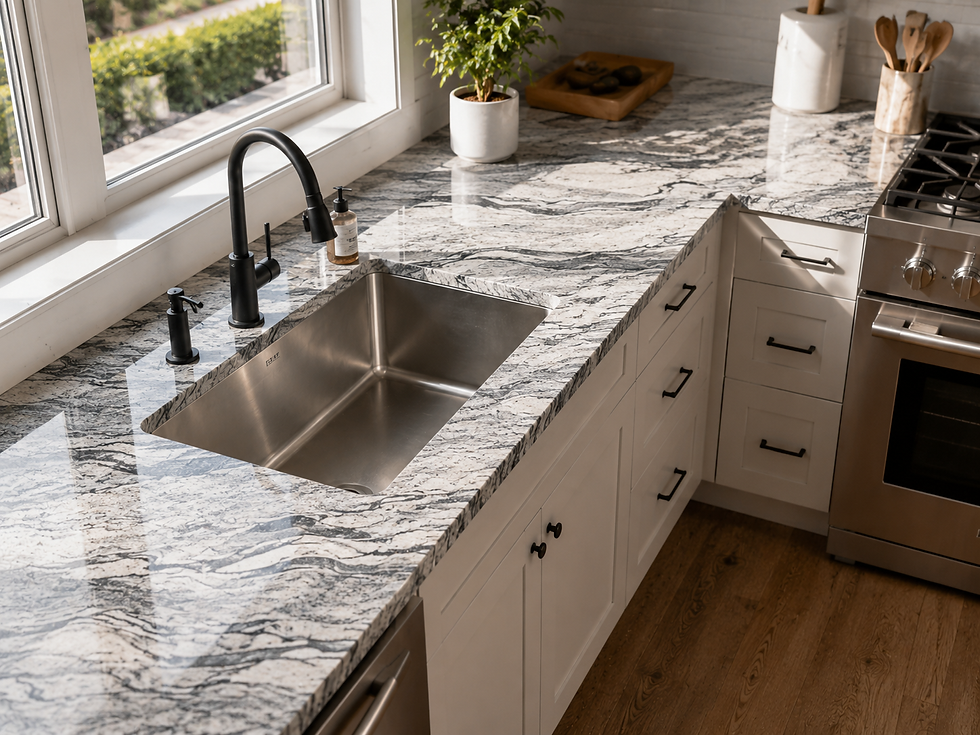
The most useful answer is this: reseal when the water test says to, not on a fixed calendar. For a lot of residential kitchens, that lands somewhere in the range of once every one to three years. Yours could be shorter or longer.
A few things push that timeline in either direction:
How hard the kitchen works: a busy cooking household with daily spills will wear a seal faster than a lightly used bar or guest kitchen.
The stone itself: porous granites need attention sooner, dense ones need it rarely.
Cleaning habits: harsh or acidic cleaners break sealer down faster, which we cover in the next section.
Colorado's dry climate: high-altitude air is thirsty, so spills can dry and draw into an unsealed surface more quickly here than in humid regions.
When it is time, sealing granite is straightforward. Clean and fully dry the surface, apply a stone-safe penetrating sealer evenly, let it soak in for the time the product specifies, then wipe away the excess before it hazes. The whole process is easy to do yourself, and the water test tells you when to repeat it. The goal is not to seal constantly. It is to reseal at the right moment.
Granite Sealing Mistakes to Avoid
The most common granite problems we see are not caused by too little sealing. They are caused by the wrong habits around it. Avoid these and your granite will look better for longer.
Over-sealing the surface: applying sealer to stone that does not need it can leave a dull film or sticky residue instead of soaking in. More sealer is not more protection.
Using acidic or harsh cleaners: vinegar, lemon, bleach, and many all-purpose sprays slowly eat away at sealer and can etch the finish. Reach for a pH-neutral, stone-safe cleaner instead.
Skipping the cleanup step: if you leave excess sealer sitting on top of the granite, it dries into a haze that is frustrating to remove.
Assuming granite is maintenance-free: it is low maintenance, not no maintenance. A little attention prevents the stains that are hard to reverse.
If a stain has already set into unsealed granite, resist the urge to scrub it with something abrasive. Deep stains often need a poultice or professional help, and aggressive cleaning can make the spot worse.
What Sealed Granite Still Needs From You
Sealing handles the deep protection. The rest is simple daily care that keeps the surface looking sharp.
Wipe up spills when they happen, especially oil, wine, and anything acidic. A sealed surface gives you more time, but it is not a reason to leave a puddle sitting for hours. For everyday cleaning, warm water and a little mild dish soap work well, or a cleaner made for natural stone.
Use a cutting board rather than cutting directly on the granite. Your knives will thank you, and you avoid dulling the finish. Set a trivet or pad under slow cookers and very hot pans. Granite handles heat well, but sudden, concentrated temperature swings are not worth risking on any natural stone. None of this is demanding. It is the same rhythm that keeps a quality surface performing for decades.
Choosing Granite With Confidence
Sealing is easier to live with when you start from a well-chosen slab. The density, color, and character of your granite shape how it behaves, and those are things you can only judge in person. A photo cannot tell you how a slab will read in your kitchen light or how the pattern flows across a full piece.
That is where seeing the stone matters. At our Palmer Lake slab yard, you can walk the full inventory, compare granites side by side, and get straight guidance on which slabs suit your kitchen and your maintenance preferences. Because International Stoneworks fabricates in-house, the slab you choose is the slab we cut and install, so the veining you fall for is the veining that lands in your home. With more than 25 years of fabricating and installing stone across Colorado, our team can help you pick a granite you will be glad to live with, not just look at.
Ready to see your options? Visit our Palmer Lake slab yard or request a free estimate to get clear guidance on the right granite for your project.
Frequently Asked Questions About Granite Sealing
Do all granite countertops need to be sealed?
Most do, but not all. Denser, darker granites can be tight enough to resist absorption for years, while more porous granites need regular sealing. The water test tells you what your specific slab needs.
How do I know if my granite sealer has worn off?
Run the water test. Put a small puddle of water on a clean area and wait a few minutes. If the water beads or sits on top, the seal is holding. If the stone darkens as it absorbs the water, it is time to reseal.
Can granite be sealed too often?
Yes. Sealing granite that does not need it can leave a hazy film or a sticky residue on the surface instead of soaking in. Seal when the water test calls for it, not on a fixed schedule.
What happens if granite is not sealed?
Porous granite left unsealed can absorb oils, wine, coffee, and water, which may lead to dark stains. Some of those stains set deep enough to require a poultice or professional removal, so prevention is far easier than the fix.
What should I clean sealed granite with?
Use warm water with a little mild dish soap, or a cleaner made specifically for natural stone. Avoid vinegar, lemon, bleach, and abrasive pads, since acidic and harsh cleaners break down sealer and can dull the finish over time.


Comments